Tuesday, 26 April 2016

Watercolour Paper Review- Botanical Ultra Smooth


A review of the new Botanical Ultra Smooth paper from St Cuthberts Mill

Artist's hand painting Spanish lavender in watercolour using a sable brush on Botanical Ultra Smooth Paper

In recent months, watercolour paper has been a hot topic across social media. 

Many botanical artists, like myself, use the Fabriano Artistico Hot Press paper, and recent changes to the manufacturing process have left lots of artists feeling less than satisfied.  St. Cuthberts Mill, a British company, recently brought out two new papers, which they are marketing as an alternative- Saunders Waterford HP and the Botanical Ultra Smooth. 

So, when Jackson’s Art contacted me and asked me to try out the new Botanical Ultra Smooth for them, I immediately said yes. I haven't had any problems with the Fabriano Artistico myself, as I still have a reasonable stock of it, but like many, have been wondering what paper to get when I need to order more. There have been mixed reports about the Botanical Ultra Smooth (some good, some bad), so I was curious to see for myself just how this new paper performed.

Monday, 15 February 2016

Saving the Art of Vellum

A blog post on why I am happy that the art of vellum is being saved.


Watercolour painting of yellow laburnum flowers on natural calf vellum by Shevaun Doherty
Laburnum anagyroides on vellum (crop)
I awoke today to hear the very good news that the British Government were not going ahead with their plans to stop using vellum for their archive copies of UK Acts of Parliament. 

The arguments for changing from vellum to archival paper were purely financial, because it is inconceivable that anyone would want to lose a centuries old tradition that includes the Domesday Book (1086) and the Magna Carta (1215). By switching to paper, the UK government claimed that they would save £80,000 per annum, although in fact, they only pay £46,000 p.a. to William Cowley’s, the sole producer of vellum in the UK and Ireland. It goes without saying, that the Irish Government would also quickly move to adopt such a decision if it was to go ahead.


So why do I care?

Sunday, 24 January 2016

Expressive Lines

Watercolour painting of a red and purple leaf and flower, Jacob's Coat Plant, by Shevaun Doherty
“The song of the curved line is called happiness.”
Rene Crevel
What is a line, and how can we use it to improve our art?

Art begins with a line.
Sometimes it’s tentative, thoughtful, exploring. 
Sometimes it’s quick, bold and confident.

Monday, 11 January 2016

The Artistic Process

Sketchbook studies in watercolour of green fern leaf by Shevaun Doherty
Blechnum gibbum studies © Shevaun Doherty
“Love the process and the painting will happen”

A friend once remarked that being a botanical artist is as much about loving the artistic process as it is about the painting. 
It’s true. I get a huge amount of pleasure out of creating study sheets and colour charts, chasing a leaf or flower across a sketchbook page, each time tweaking the colour mixes until it’s just right.

Artist desk with colour charts and watercolour studies of a leaf

Although there is an element of play in this, the notes that I make are also extremely useful. I’m constantly pulling out old sketchbook studies to find out what colour mixes I used to get a particular shade of green, or how to achieve a particular texture.

Watercolour study of Limonium sinuatum by Shevaun Doherty
Limonium sinuatum colour notes
Sketchbooks and study notes help me explain my process to other artists, particularly those who are just starting their own botanical art journey. I think it’s a bit of a relief for them to see the messy bits and the occasional crises of confidence (help! I’ve forgotten how to paint) !

Sketchbook page of pelargonium flowers with colour notes by Shevaun Doherty
It doesn't always work out, but making mistakes is part of the process
Very often our focus is on the destination and not on the journey, and that can lead to a creative block. It’s important to stop worrying about the finished painting, that ominous blank sheet of paper, and just enjoy the creative process that is needed to get us to that point. 
It’s only paper after all.

Sketchbook study of date palm leaf with colour notes by Shevaun Doherty
Phoenix dactylifera leaf studies... a case of trial and error!

Here are 6 steps to my artistic process-

Friday, 1 January 2016

Plans, Paintings and Promises 2016


Great Eggspectations- watercolour painting of 3 quails eggs and a feather by Shevaun Doherty
'Great Egg-spectations'  ©Shevaun Doherty 

You’re off to great places! Today is your day! Your mountain is waiting, so get on your way! 

Dr Seuss

I really enjoy writing this post, because whenever I think about my plans for the year ahead, I inevitably end up feeling really excited! 
Already 2016 looks like it will be a whirlwind of art-filled fun!

Blogging


I promise to blog more regularly in 2016. Recently my weekly blogposts have fallen by the wayside, mainly because I am doing an evening course on Digital Marketing as well as painting full time. The online art market is such a fascinating subject, and definitely something that all artists should learn more about. So as well as sharing art tips and techniques on my blog, I will also be writing articles on how to tackle the dizzying world of social media.

Sunday, 29 November 2015

Good News

“Happiness lies in the joy of achievement and the thrill of creative effort.”Franklin D. Roosevelt
Life has been incredibly busy these past few weeks, so much so that my blog writing has fallen to the wayside. 
The Agapanthus commission for the de Jager Bulb company has been by far the most challenging painting that I have ever painted. Getting it finished within the deadline meant that I have been spending long hours at my easel!

Painting long into the evenings. Thank goodness for Daylight lamps and coffee!
I will be writing about my "Agapantha-marathon" in more detail in my next blogpost, but there has been a flurry of good news recently, so here’s a quick update!

Monday, 26 October 2015

Olive Inspiration


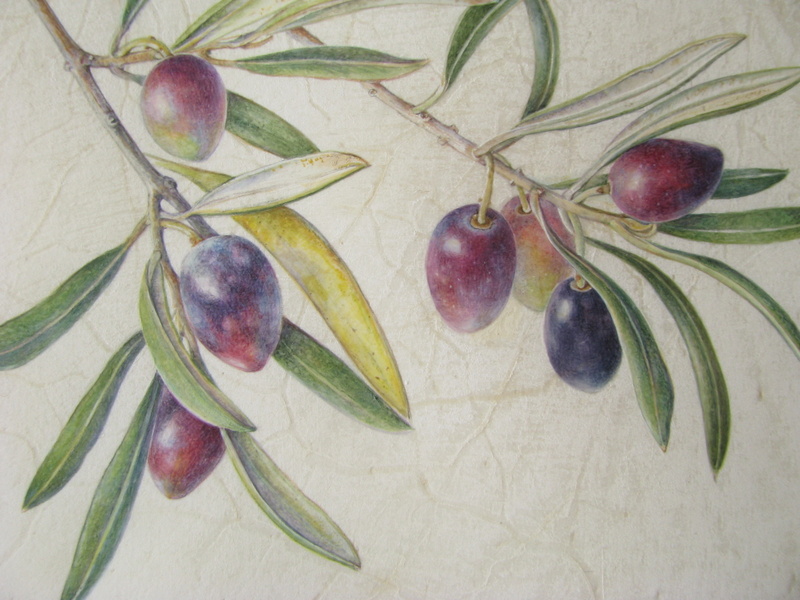
Olea europea, olive painting on vellum Shevaun Doherty
A Taste of Spain, watercolour on vellum, ©Shevaun Doherty 2015
"When you do things from your soul, you feel a river moving in you, a joy" ~Rumi
 Every now and then something finds you, and it whispers to you about golden sunshine, birdsong and the rich warm smell of earth. 
Paint, it says.

Monday, 12 October 2015

Life in Colour- Madrid

Ferdinand Bauer's Colour notebook, Royal Botanic Gardens Madrid
Ferdinand Bauer's Colour Chart, Royal Botanic Gardens, Madrid
“To move, to breathe, to fly, to float,
To gain all while you give,
To roam the roads of lands remote,
To travel is to live.” 
Hans Christian Anderson

I have just returned from a week of light, colour, laughter, friendship and fabulous art in Madrid.

Monday, 21 September 2015

Beware of the Agapanthus


Agapanthus flowerhead (work in progress) Shevaun Doherty
Agapanthus II (unfinished) Shevaun Doherty 2015 
"Procrastination is like a credit card: it's a lot of fun until you get the bill."
Christopher Parker

I love what I do, but sometimes it’s a struggle. On my easel is

Sunday, 6 September 2015

In the footsteps of Ellen Hutchins


Shevaun Doherty SBA Botanical Artist
"An understanding of the natural world and what's in it,
is a source of not only a great curiosity but great fulfillment." 
David Attenborough

A curious mind is an essential part of being a botanical artist, so when I was asked by Howard Fox,  botanist at the National Botanic Gardens, to get involved with the Ellen Hutchins bicentenary celebrations, I said

Friday, 21 August 2015

The Big Blue Monster

 
Agapanthus africanus WIP, Shevaun Doherty, botanical art
Agapanthus africanus WIP © Shevaun Doherty 2015

“Perseverance, secret of all triumphs.”
Victor Hugo

I am not a flower painter. 
Don’t get me wrong, I adore flowers of every kind, and I really admire artists who can capture that transient beauty with what seems like effortless grace. I’m just far happier painting fruit, seeds and dried plants, where I can indulge myself in the luxury of time, knowing that they aren’t going to wilt before my eyes.

Agapanthus africanus studies, Shevaun Doherty
Initial studies
The Agapanthus africanus is really not for the faint hearted. It’s a big robust ball of blueness that stands out taller than it’s neater cousins, Agapanthus praecox. Whilst doing my bud studies, I noticed with a bit of alarm, that there were over 50 flowers in each umbel! (I counted them in a fit of procrastination) Okay, so they weren’t all going to open at the same time, but once they started to open, it was definitely going to be a race against time.


So how to start?

Friday, 7 August 2015

Buds and Blooms

Agapanthus bud, Shevaun Doherty, botanical art
Agapanthus bud © Shevaun Doherty 2015
"Each flower is a soul opening out to nature." 
-  Gerald De Nerval

They say that there is no greater motivating factor than a deadline, but for a botanical artist, the realisation that the flowers are just not going to wait for their portrait to be painted is enough to get even the slowest of brushes flying!

After months of waiting patiently for the flowers to appear, my beautiful blue Agapanthus africanus flowers are now all blooming at once. Mild panic sets in as I suddenly realise

Saturday, 1 August 2015

Summertime Blues

Shevaun Doherty Agapanthus bud botanical painting

“Blue colour is everlastingly appointed by the deity to be a source of delight.”
John Ruskin

Blue is the colour that sings to us of heaven and sky, of fresh water and deep oceans, of spirituality, serenity and stability. It’s definitely one of my favourite colours, and yet I don’t seem to paint many blue subjects. All that is about to change, because I have a garden full of blues … tall elegant Agapanthus flowers that are just coming into bloom.


The first challenge with any new plant is the set-up. It’s great when

Saturday, 25 July 2015

Changes

Peacock Butterfly Shevaun Doherty
“Change always comes bearing gifts.”
Price Pritchett

A change is as good as a rest they say. Recently I needed to take a short break from the botanical art and blogging, and take time out to catch up with my life.
Change is good. It gives you a chance to re-evaluate

Thursday, 2 July 2015

Bees and Butterflies

African Monarch butterfly by Shevaun Doherty SBA
African Monarch butterfly  © Shevaun Doherty
"Small deeds done are better than great deeds planned"
Peter Marshall

Summer is here, and as I write this, I’m sitting in my garden, bathed in sunshine, surrounded by flowers and the steady hum of bumblebees. Every now and then a butterfly flits between the blossoms, pausing briefly to sip on nectar before fluttering off to explore another garden. 
All around me nature is blissfully at work.
However this might not always be the case. A recent worrying report by the International Union for Conservation of Nature (IUCN), states that we are losing entire species at an alarming rate, so much so that we are in danger of losing 30-50% of all species by mid-century. Unlike previous mass extinctions, this is entirely due to man’s devastating effect on the planet.


Of course, we all read things like this and wonder just how we can help, but each of us can, in our own little way, and we can start in our own back garden with the bees and the butterflies.Their numbers are in rapid decline, and if they disappear, the effects will cascade throughout ecosystems, affecting all aspects of life on earth. 

Tuesday, 16 June 2015

Challenges! Painting the Laburnum

Laburnum anagyroides painting by Shevaun Doherty
Laburnum anagyroides on natural calf vellum © Shevaun Doherty 2015
“Start where you are. Use what you have. Do what you can.”
Arthur Ashe

Sometimes we sail through life like a ship on a calm sea, and at other times, everything seems to come at once- a veritable maelstrom of appointments, deadlines, exams, exhibitions and meetings. I’ve been channelling my inner Wonder Woman recently, and rather than allowing everything to overwhelm me, facing my challenges one at a time.
I can do this!

A plentiful supply of fresh flowers is a must for a complex painting such as this. Okay, perhaps I was a little too enthusiastic!
Right at the top of my To-do list has been the laburnum. Not only did I have a deadline that was looming with ever increasing urgency, but the flowers were blooming and finishing before my eyes!

Laburnum painting Shevaun Doherty
Plant, vellum, I'm all set to go!

Saturday, 30 May 2015

Bloom 2015


Shevaun Doherty SBA Red dates
 Red dates Phoenix dactylifera, GOLD MEDAL ©Shevaun Doherty 2013
The difference between TRY and TRIUMPH is a little UMPH.
~Anonymous

I am walking around with a grin that would do the Cheshire Cat proud. 
This has been a bit of a rollercoaster year for me, but this week, all the hard work, time and sheer stubbornness paid off. 
I won TWO medals, a Gold and a Silver, at Bloom Botanical & Floral Art Exhibition!!!


"Per aspera ad astra" (Through difficulties to the stars)
Aesculus hippocastanum triptych SILVER MEDAL
 Woohoo!!

I was very lucky to win a gold medal last year, but to get a second this year was a huge surprise! It’s like hearing a little voice saying in my ear “Keep going. You’re on the right path”.
Excuse me whilst I do another little happy dance around my room from the sheer delight of it all!


Sunday, 17 May 2015

In praise of the Daisy

“The flower doesn’t dream of the bee. It blossoms and the bee comes.”
Mark Nepo

  I have always loved daisies, Bellis perennis . There’s just something so bright, cheerful and positively defiant about them. So I jumped at the chance to do a small painting of daisies for a friend. To me, nothing sings of summer more than the sight of daisies on the lawn. It makes me want to kick off my shoes, sit on the grass and make daisy chains. 
As A.A. Milne said, 
“Weeds are flowers too, once you get to know them.”

I've potted up some little daisies and put them in my garden. The bees love them and so do I.
The Latin name for daisy is Bellis perennis meaning "everlasting prettiness".
The word “Daisy” is thought to come from it’s earlier Saxon name “Day’s Eye”, which is probably  because every evening at sunset the daisy closes it’s petals over it’s golden centre, and unfurls them at dawn the following day, as if opening it’s eye. 
We still refer to someone who has had a good night’s sleep as appearing as “fresh as a daisy”.

My desk with the daisy pots. They actually have quite a sweet perfume. I smiled to see that even on a rainy day, their flowers follow the sun.
In fact the little daisy has been given many names throughout history, my favourite being the old Welsh name of “Trembling Star”. 
It has long been considered a medicinal plant and featured in many of the early herbals. 

First the bee, and then the flower. The shapes are all drawn in very roughly.
It was also called Woundwort or Bruisewort because of it’s healing qualities. The Romans were said to carry bags of fresh daisies into battle, so that the wounded could be treated with bandages that had been soaked with the juice of the flowers. The Crusaders too valued it’s healing powers for pain relief, bruising and broken bones. It is sometimes referred to as Poor Man’s Arnica, and used externally to heal bruises and trauma.

The flowers are slowly appearing.
In fact the medicinal properties of the daisy are many. Henry VIII was said to have chewed on the leaves and flowers of daisies in order to relieve his stomach ulcers. Chewing the young leaves of daisies is also said to be a remedy for mouth ulcers. Both the leaves and flowers of the plant are edible and can be used in salads and soups. There are mixed reports as to the flavour, but the younger leaves are reported to have a less astringent taste. The flowers have a mild taste but are certainly a pretty addition to any dish.

The flowers are done, so  now I start to pick out the negative shapes between the leaves with shadow colours of blues, purples and greys.

One of the best ways to get the health benefits of daisies is to make a tea from the leaves. Daisy tea is said to aid digestion and strengthen the metabolism. It is also said to clear catarrh and soothe coughs. Simply pour boiling water over a handful of daisies and leave to infuse. Strain and serve.


As soon as I start to add the warmer colours of the leaves, it comes to life. The leaves grow in basal rosettes, so I tried to show this... not easy when there are just so many leaves!
I really enjoyed painting the daisies.  As they are an important bee food, I decided to include a White tailed Bumblebee, Bombus lucorum enjoying the daisy nectar. The flowers were fairly straightforward to paint, but the leaves were quite a different matter. They grow in clumps, a seemingly confusing tangle of hairy spoon shaped leaves. It took me a while to figure out just where to begin. I started by picking out the negative shapes in a grey wash of cerulean and cobalt violet with a touch of light red, before painting the leaves with a mix of indanthrene and transparent yellow. Rather than fuss over every leaf, I kept it fairly loose and painterly.

© Shevaun Doherty 2015
 “Daisies of the world unite - you have nothing to lose but your chains”
~Anon

It was nice to have the opportunity to study this little plant closely. The little daisy is so easy to overlook, to dismiss it as a weed, but it has a lot going for it. If anything you have to admire it’s tenacity and it’s ability to pick itself back up after each run-in with the lawnmower.

Said the other little daisy, “I am very well content
To live simply in the meadow where the sun and rain are sent;
Where the bees all gather sweetness, and the dew falls on my head,
And the radiance of the moonlight is all around me shed.
The grass and clover blossoms admire my beauty all day long,
As I listen to the music of a bird’s delightful song”
“Two Little Daisies” (The other little daisy wished to be a rose)

Monday, 11 May 2015

Laburnum Revisited


“Be Patient.
Respond to every call that excites your spirit.”
Rumi

Patience is an attribute that every botanical artist needs to have. Choosing to paint from life means that we are very much at the whims of nature, constantly marking the seasons and watching the weather. It’s not unusual for a botanical artist to set aside a painting for a year whilst they wait for a plant to bloom once more or a fruit to ripen.  


In my garden I have a beautiful laburnum tree (Laburnum anagyroides) that for a few weeks each year, fills my garden with cascades of glorious golden flowers and a wonderful perfume that sends bees into rapturous joy. Every year I promise myself that I will paint it but time has always been against me. 


Last year I managed to do a small study for the sketchbook exchange and I promised myself that this year, I would be ready!


So I have been patiently watching my garden with a growing sense of anticipation. I have a gorgeous piece of honey coloured natural calf vellum which will really set off those golden flowers. 


Whilst I waited, I decided to do a few small studies to hone my palette. Yellow is a tricky colour to paint. It can slip from glowing to drab in a few washes, which makes varying the tones quite difficult. Some artists achieve wonderful results by doing a monochromatic study first in greys and then painting a wash of yellow over it. Others mix their yellows with tiny bits of purple to create shadow tones.


 Personally I prefer to keep my colours as clean as possible and use the large range of yellows available to create the tones. That said, a few shadow colours, purple-grey or green will slip into the mix towards the end if I felt it is needed.

There is no right or wrong way. If it works, do it!


So first to make a huge yellow colour chart. Yes, I really do have all those colours, and yes, the Daniel Smith dot chart makes me want to whip out that credit card and invest in a few more. 


However I resist the urge and finally decide on my favourites of winsor lemon, winsor yellow and new gamboge as my basic yellows.


My biggest struggle is always with greens, especially on vellum where opaque paints can feel a bit like kicking a lead-filled football around a pitch. So I needed to find a good transparent green mix. Fortunately my good friend Sigrid Frensen mentioned how nice turquoise was with quinacridone gold, both wonderfully transparent. 

Winsor Blue Green with Quinacridone Gold ... a fabulous mix!
So having played around with several mixes, I settled on Winsor Blue-Green with quinacridone and a little transparent yellow. I have had Winsor Blue Green for years but always ignored it as it was just too bright for any of my mixes. The Quin gold tames it beautifully.

Playing with green mixes

Of course it is not just botanical artists who revisit favourite subjects to paint, artists have done this for centuries. Each time they paint their subject, they discover something new. It allows them to develop their techniques, their composition and their colour palette.
Inspiration stimulates creativity.


My imagination has been caught! Bring on the blossoms.

“The glow of inspiration warms us and it is a holy rapture”

Ovid